

Blinkist turns the main ideas from nonfiction books and podcasts into short text and audio summaries. It is built for a commute, a walk, or another small gap where starting a full book is unlikely.
A summary can help you discover a subject or recall a book you already read. It cannot carry the evidence, examples, and argument of the full work, so treat it as a map rather than a replacement.
Read or listen to one short summary
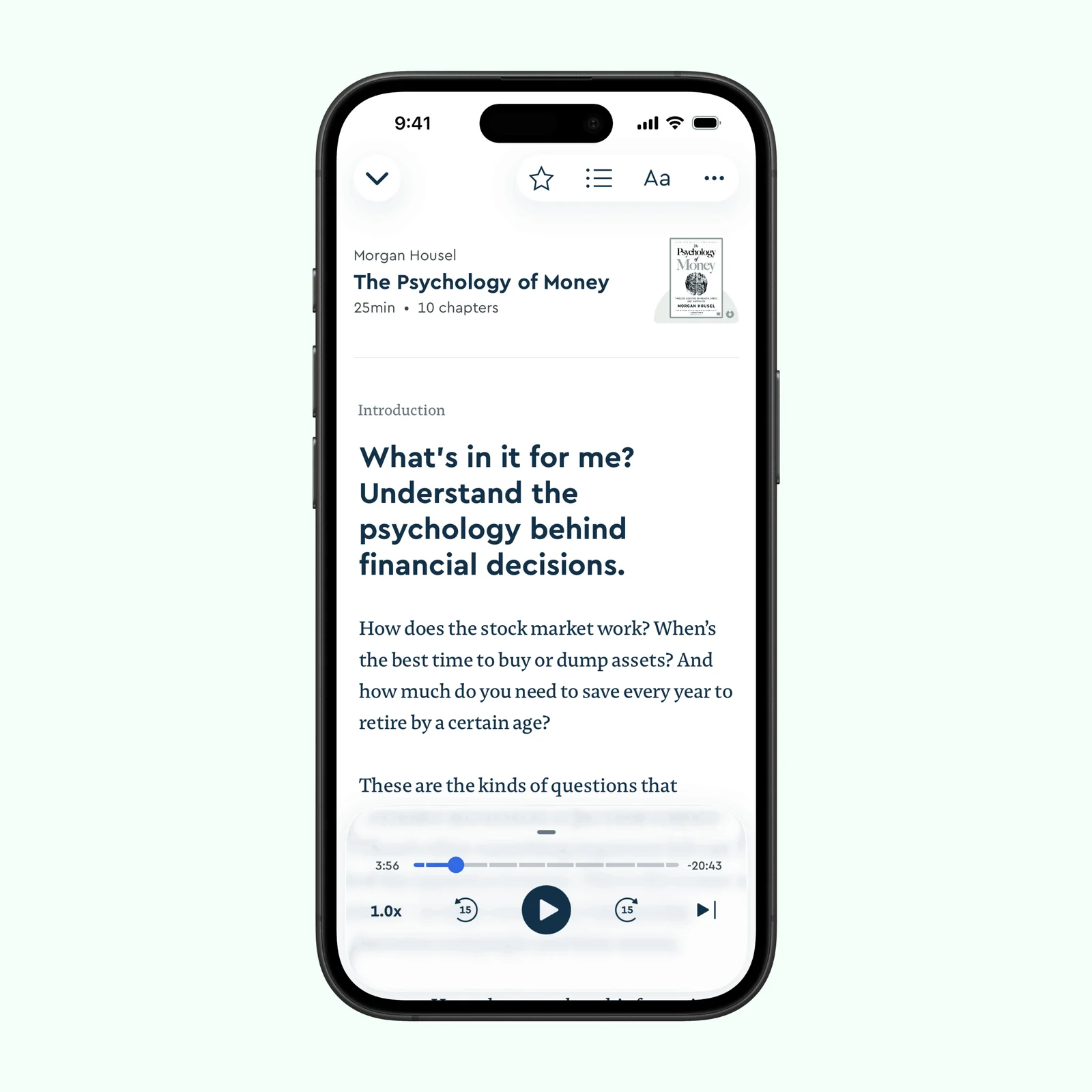
Each title is divided into short chapters and can be read or played as audio. The visible duration makes it easy to choose something that fits the time you have.
Switching between text and audio is useful when a session crosses settings. You can listen while walking, then read a section again when an idea needs more attention.
Return to what you finished
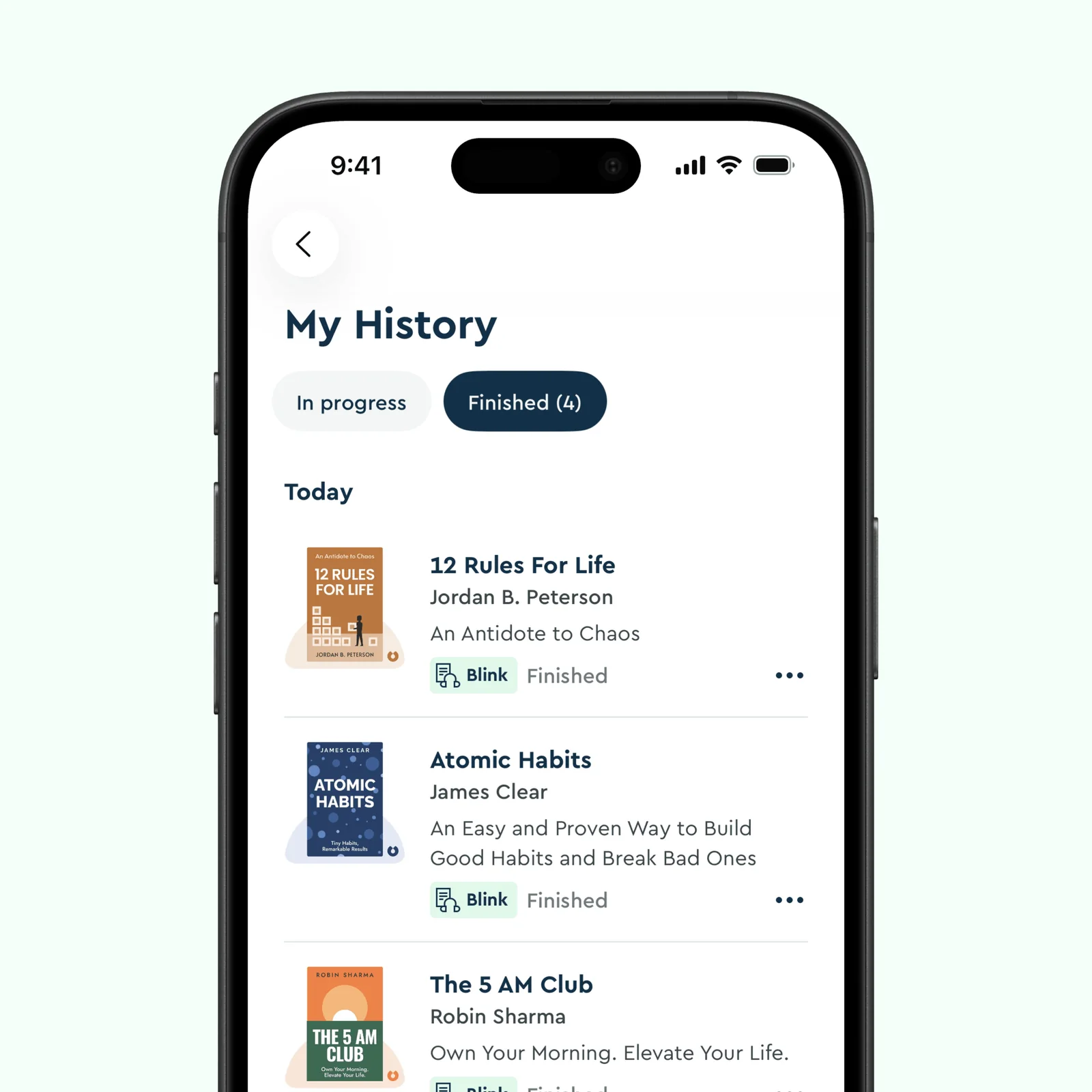
The history view keeps completed summaries in one place. This matters because a stream of condensed ideas can become forgettable if you never return to any of them.
After a useful summary, save one note in your own words or find the full book. A small follow-up action is more valuable than finishing several titles only to raise a counter.
Use the audio player during a spare moment
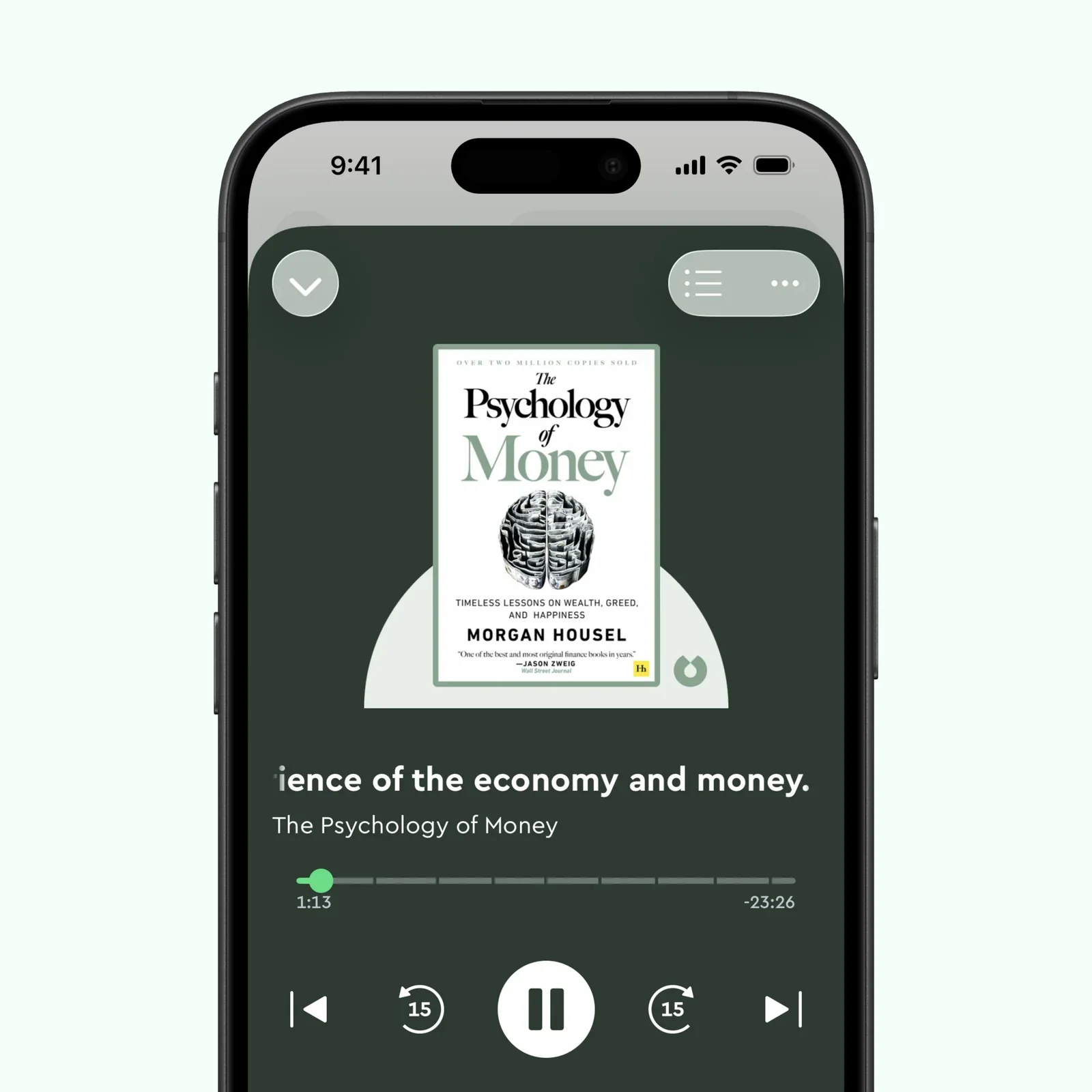
The audio player includes speed, progress, and AirPlay controls. It works well for a regular ten or fifteen-minute slot because you can continue from the same place without choosing new material every time.
Personalized recommendations can reduce browsing, but they can also keep you inside familiar subjects. Search for a topic outside your usual list from time to time if discovery is part of the goal.
What to know before you try Blinkist
Blinkist is free to download on iPhone and iPad, with paid plans for full access. The current listing describes a library of more than 9,000 summaries.
The catalog is broad, but it does not make every title equally reliable or relevant. Look at the author and original publication before treating a summary as current guidance. This matters most for health, finance, law, and other subjects where a short explanation can hide important conditions.
Downloads and offline listening can make a commute easier, while notifications can turn a deliberate habit into another feed. Save a small queue and disable prompts that push more material than you can use. Finishing less and applying more is a better test of value.
Choose it if short sessions help you maintain a learning habit. Start with one subject you already care about, finish one summary, and decide whether it gave you enough reason to read or explore further.
Cancel the trial in time if the paid library does not fit that routine.