

How We Feel helps you move from a broad mood such as “fine” or “bad” to a more specific emotion. Short check-ins build a record, and the Analyze view can reveal patterns over time.
The app is an emotional wellbeing journal, not a diagnosis or replacement for professional care. Its value is giving you a clearer word and a moment to notice what is happening.
Find a more exact word
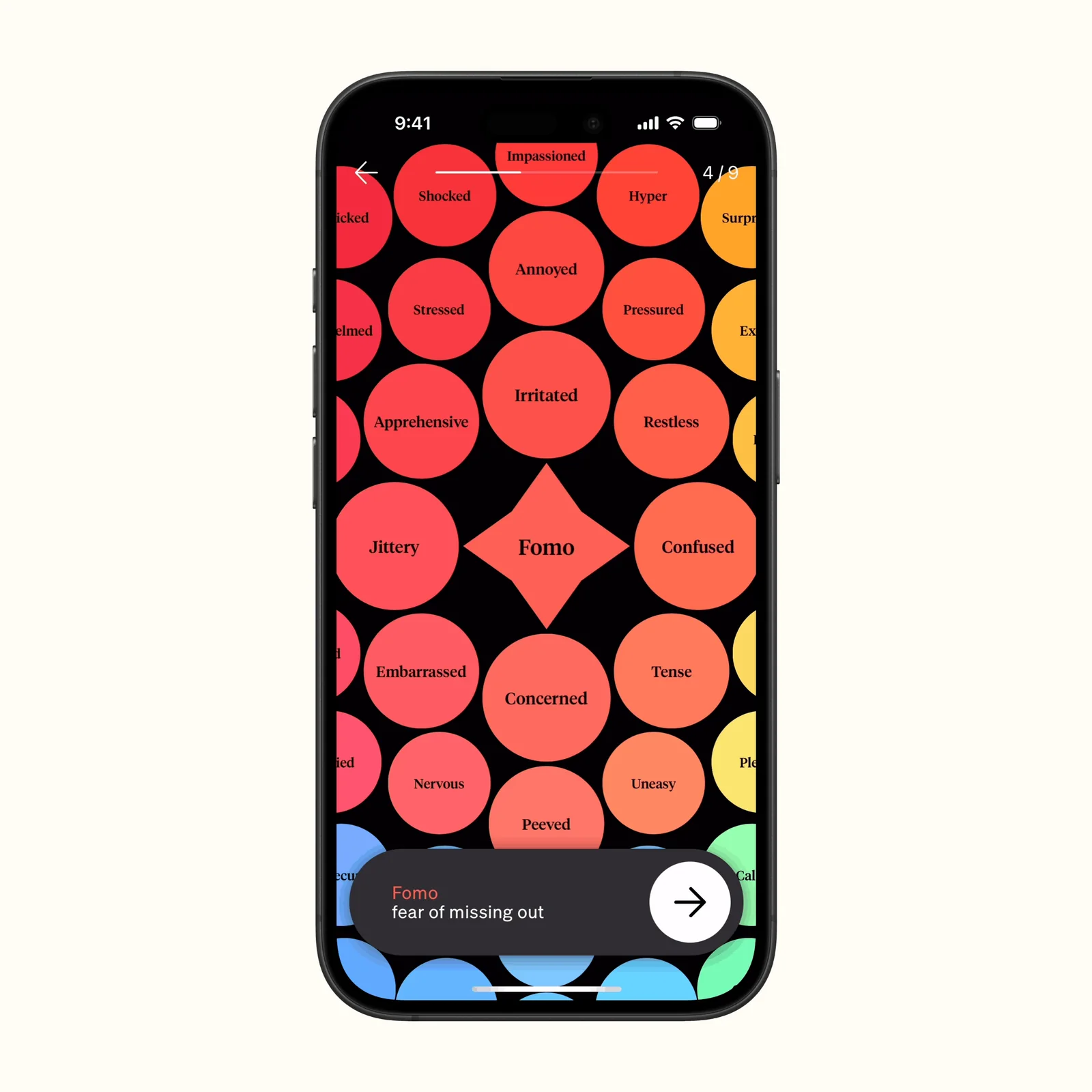
The emotion picker organizes many words by energy and pleasantness. Selecting one opens a definition, which helps when two feelings seem close or you know the general area but not the name.
Precision can change the next step. Disappointed, lonely, irritated, and exhausted may all feel “bad,” but they do not call for the same response.
Add context to a check-in
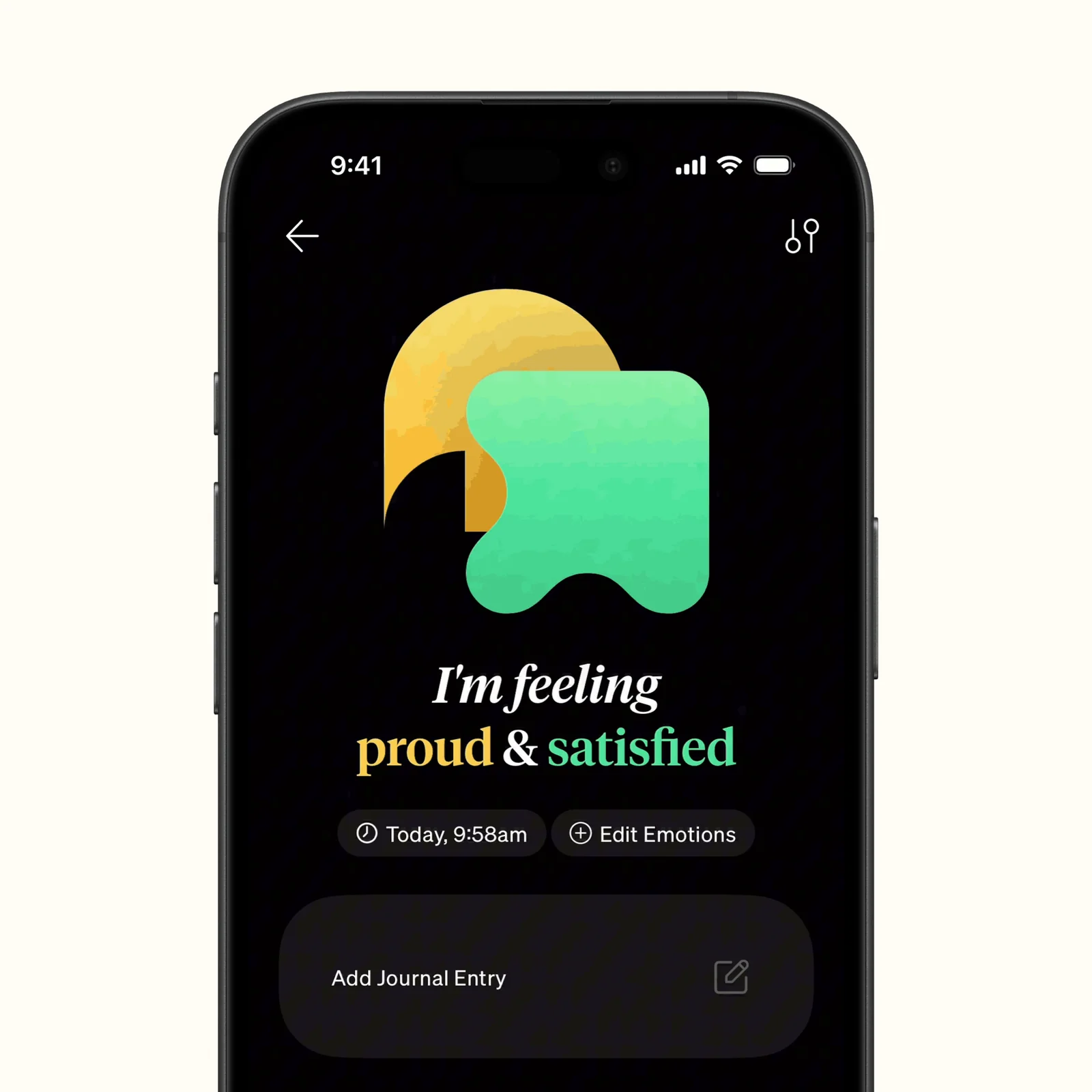
A completed check-in can include a journal note and tags for activities or context. Keep this short if a long form would stop you from recording anything. One sentence about what happened is often enough.
The app also includes step-by-step tools grouped around changing your thinking, moving your body, mindfulness, and reaching out. A tool is optional. Sometimes naming the feeling is the useful action.
Look for patterns over time
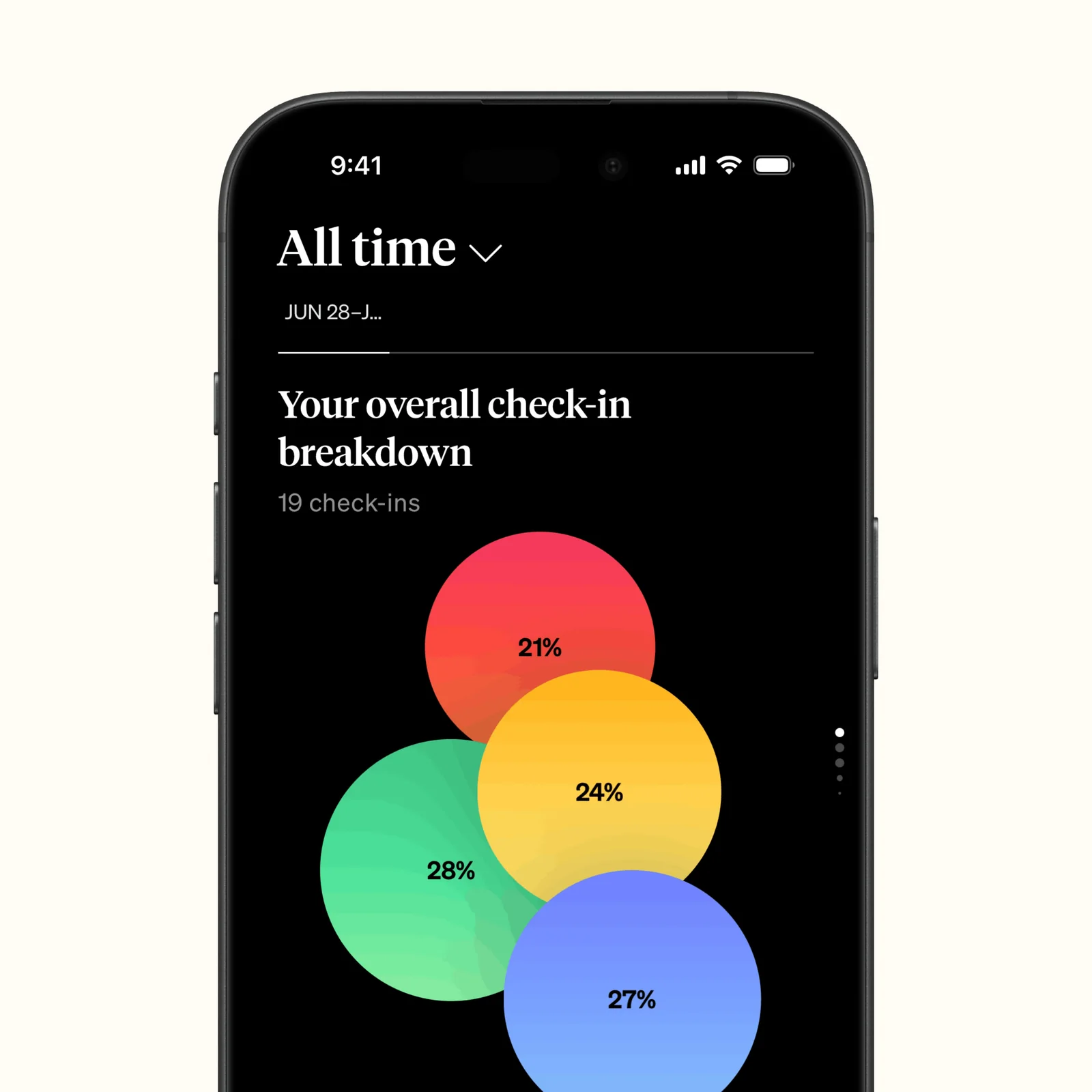
Analyze collects check-ins into a visual breakdown. Patterns can show whether certain times, places, people, or activities often appear with an emotion.
Do not force a conclusion from a small number of entries. A check-in record is subjective and incomplete. Use it to ask better questions, not to prove a simple cause.
What to know before you try How We Feel
How We Feel is free and supports iPhone and Apple Vision. The listing says data stays on the device unless you choose to share anonymized check-ins for research.
Emotion labels are useful when they open a question, not when they become a verdict about the day. Two feelings can be true at the same time, and the available word may still be an imperfect fit. Use the note field when the label alone loses important context.
If you enable research sharing, read the current consent details before you agree. “Anonymized” describes a processing choice, but emotional records can still feel highly personal. Device storage and optional sharing are separate settings that deserve separate decisions.
Choose it if mood tracking has felt too vague. Do one check-in at the same time for a week and add a short context note. That is enough to see whether the vocabulary helps.
At the end of the week, look for repeated context before counting emotion colors. A meeting, commute, meal, conversation, or time of day may be more actionable than the broad proportion shown in the chart. Write down one question to test during the next week.