
Mood apps can help you slow down before reacting. Ahead teaches emotional patterns. How We Feel helps find a precise word. stoic. combines prompts with mood tracking. Apple Journal connects reflection with moments already on your device.
These tools are for noticing and recording, not diagnosing a condition. Choose the form of reflection you can use honestly and without turning it into another score.
- Ahead for short emotional skills lessons
- How We Feel for detailed check-ins
- stoic. for guided reflection
- Journal for prompts tied to personal moments
Ahead: understand what may drive the reaction
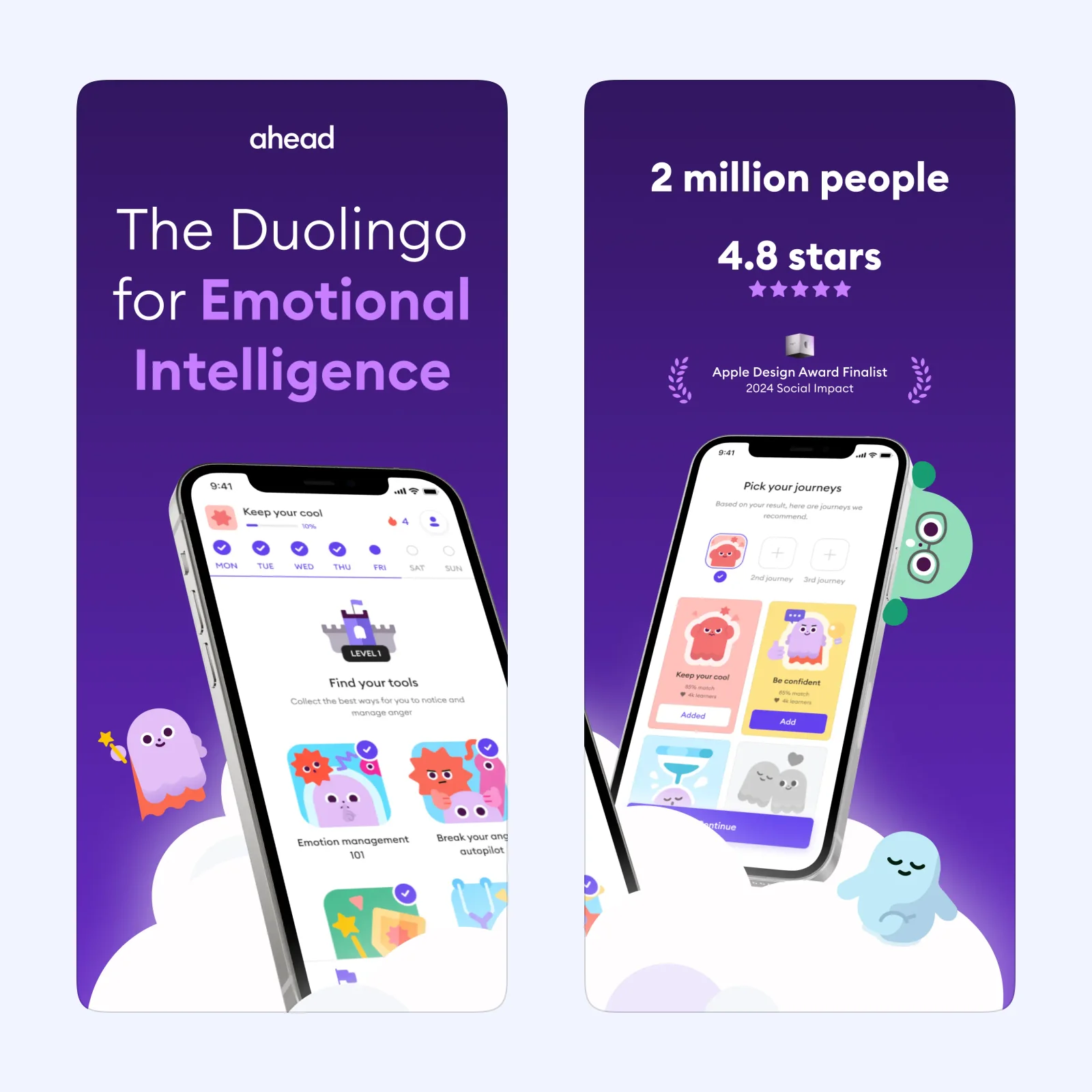
Ahead uses short lessons and exercises to explain emotional patterns and give you techniques to practice. It is closer to a guided learning program than an open journal.
The app is free to download on iPhone and Apple Vision, with paid access. Choose it when you want structure and concepts, not only a daily mood score. Apply one lesson in a real situation before moving quickly through several more.
How We Feel: find a more exact emotion
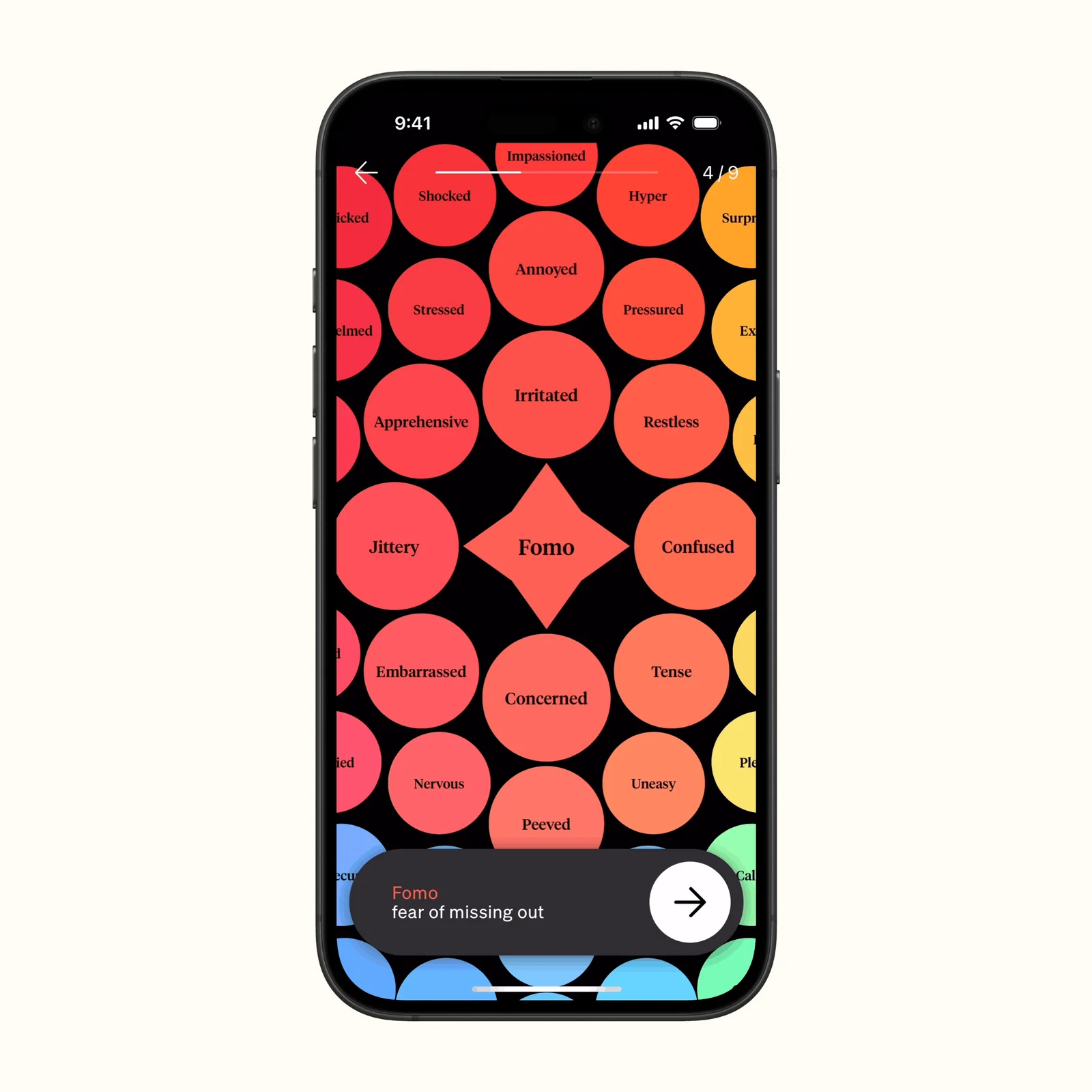
How We Feel organizes many emotion words by energy and pleasantness. Definitions help distinguish nearby feelings, while optional context and journal notes build a record for later pattern review.
The app is free on iPhone and Apple Vision. Its listing says data stays on the device unless you choose to share anonymized check-ins for research. Pick it when “fine” or “bad” is too broad to be useful.
stoic.: reflect with a guided prompt
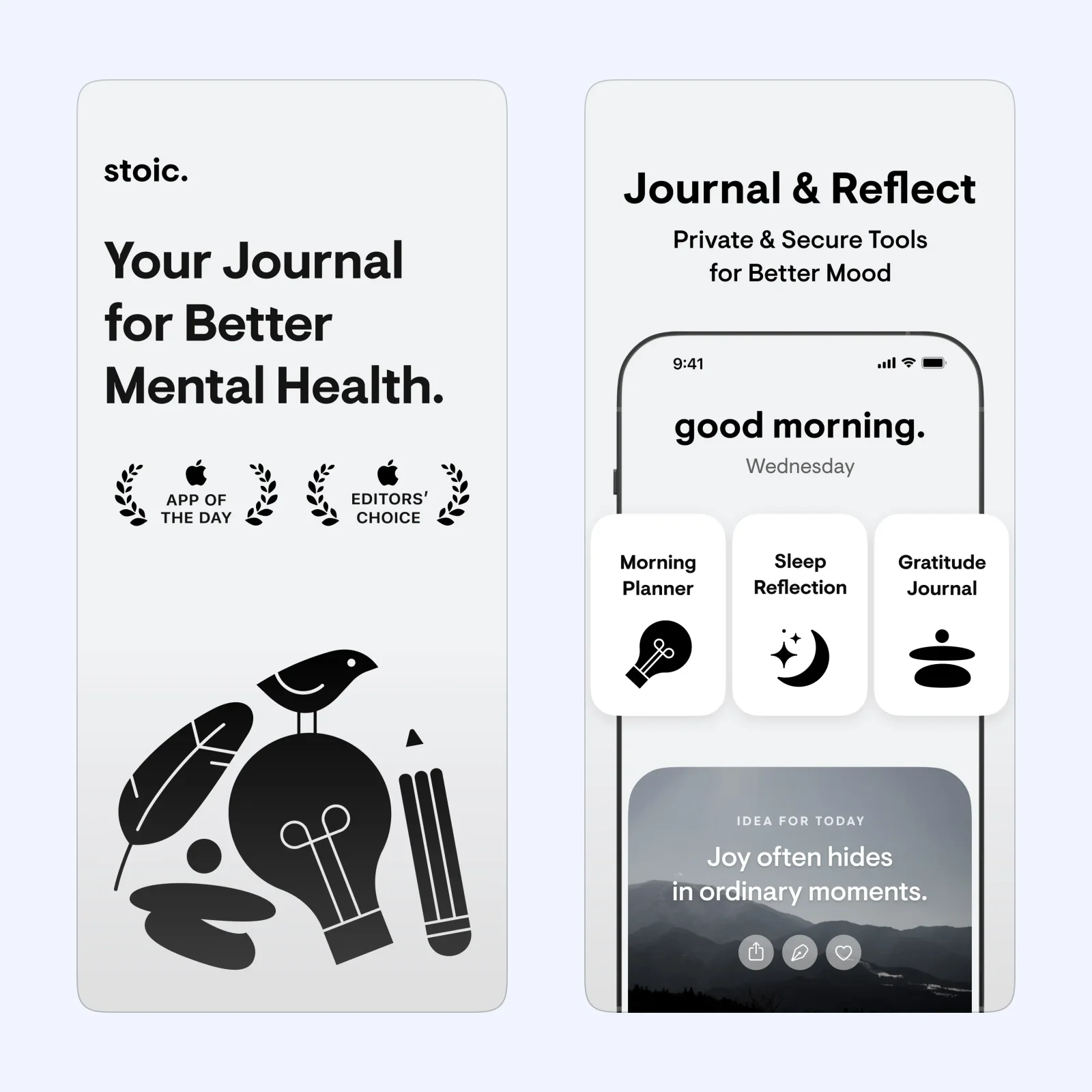
stoic. combines mood tracking, guided journal prompts, breathing, and reflection tools. Morning and evening routines can give the practice a regular place without requiring you to invent a question.
It is free to download across iPhone, iPad, Mac, Apple Vision, and Apple Watch, with paid features. Choose it when a prompt makes writing easier. Skip prompts that do not fit rather than forcing an answer.
Journal: begin with a moment from the day
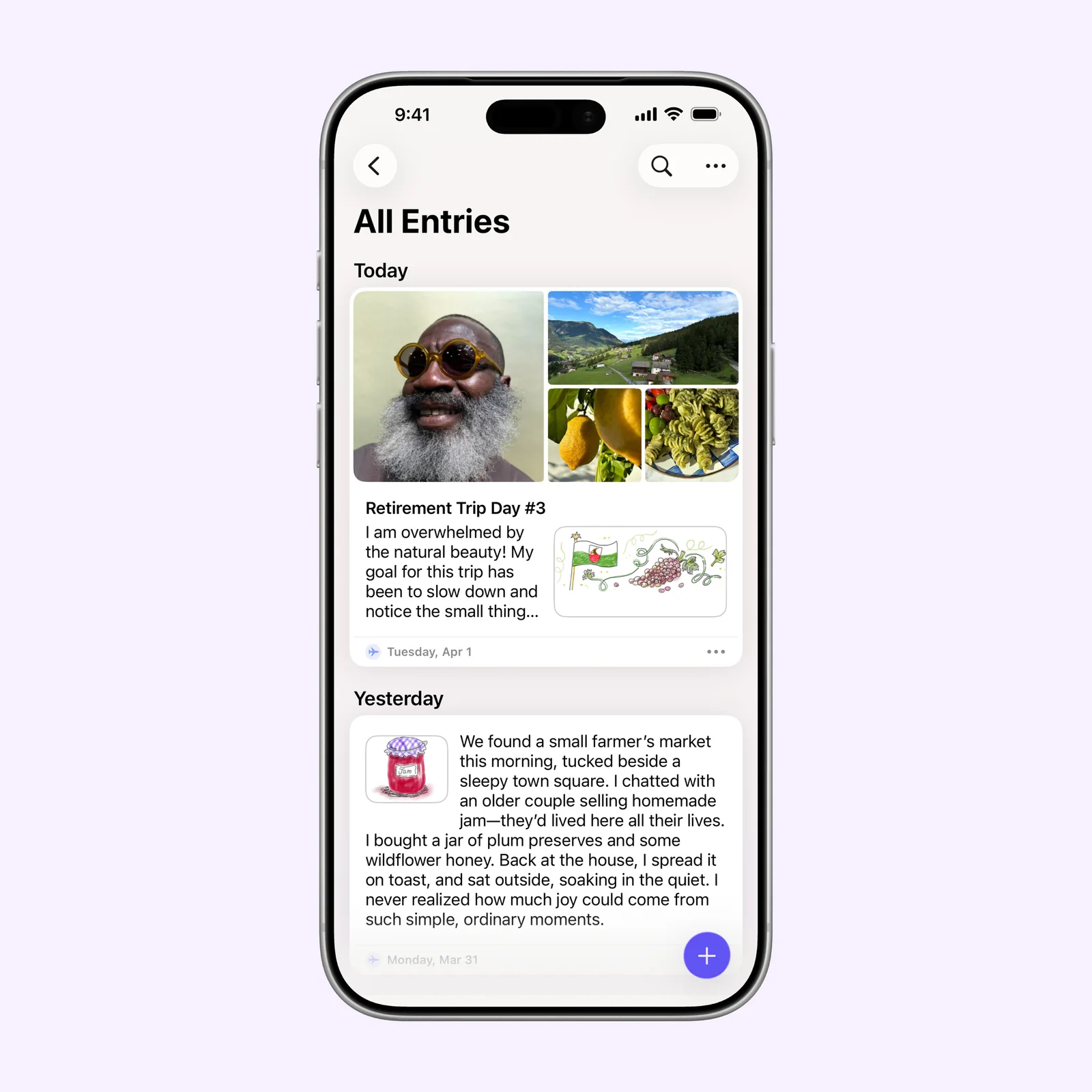
Apple Journal can suggest entries from photos, places, workouts, music, and other recent moments. The concrete memory can make it easier to explain what you felt and why.
Journal is free on iPhone and iPad. Entries can use iCloud and device authentication. Pick it when reflection works better from an event than from an emotion wheel.
Which one should you try?
Choose Ahead for lessons, How We Feel for vocabulary, stoic. for prompts, or Journal for a personal timeline. If emotions feel unsafe, severe, or difficult to manage, contact a qualified professional or local support service.
Mood records are sensitive. Review passcode, cloud sync, account, research sharing, and export options before you write details that would be difficult to replace or expose. A neutral app icon does not tell you how the underlying data is stored.
Tracking can also change attention. If repeated check-ins make you monitor every small shift or feel worse about a difficult week, reduce the frequency or stop. The record should help you understand experience, not make every emotion into a task to complete.
Do one check-in at the same time for seven days. Add one sentence about context. Review the week only after it ends, so each entry can stay an observation instead of a verdict.
If the review suggests a pattern, test it gently for another week before you act on it. Keep other changes small.