

Superlocal builds a personal map from the places you visit. Check-ins mark where you have been, and those choices help the app suggest cafés, restaurants, and other places that better match your taste.
It is a useful middle ground between a travel diary and a discovery app. The map remembers past stops while the recommendations give you a reason to open it somewhere new.
Search with your past choices in mind
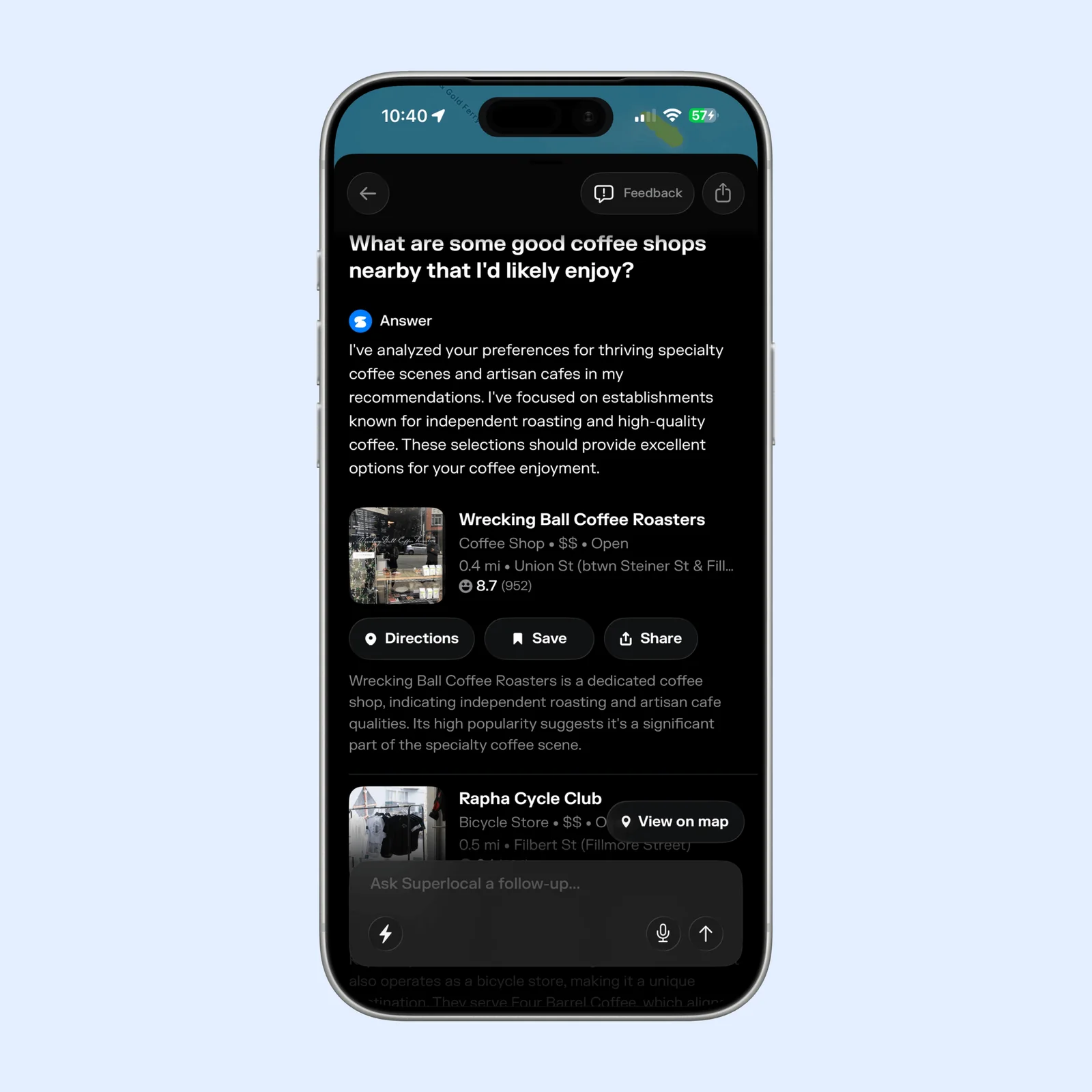
Search results can explain why a place may suit you instead of presenting only a rating and distance. Each check-in adds another signal about the types of places you enjoy.
This is most helpful in a city with too many acceptable options. The recommendation does not replace a quick check of hours, accessibility, or current reviews, but it can reduce a long list to a few plausible stops.
See the parts of the world you have explored
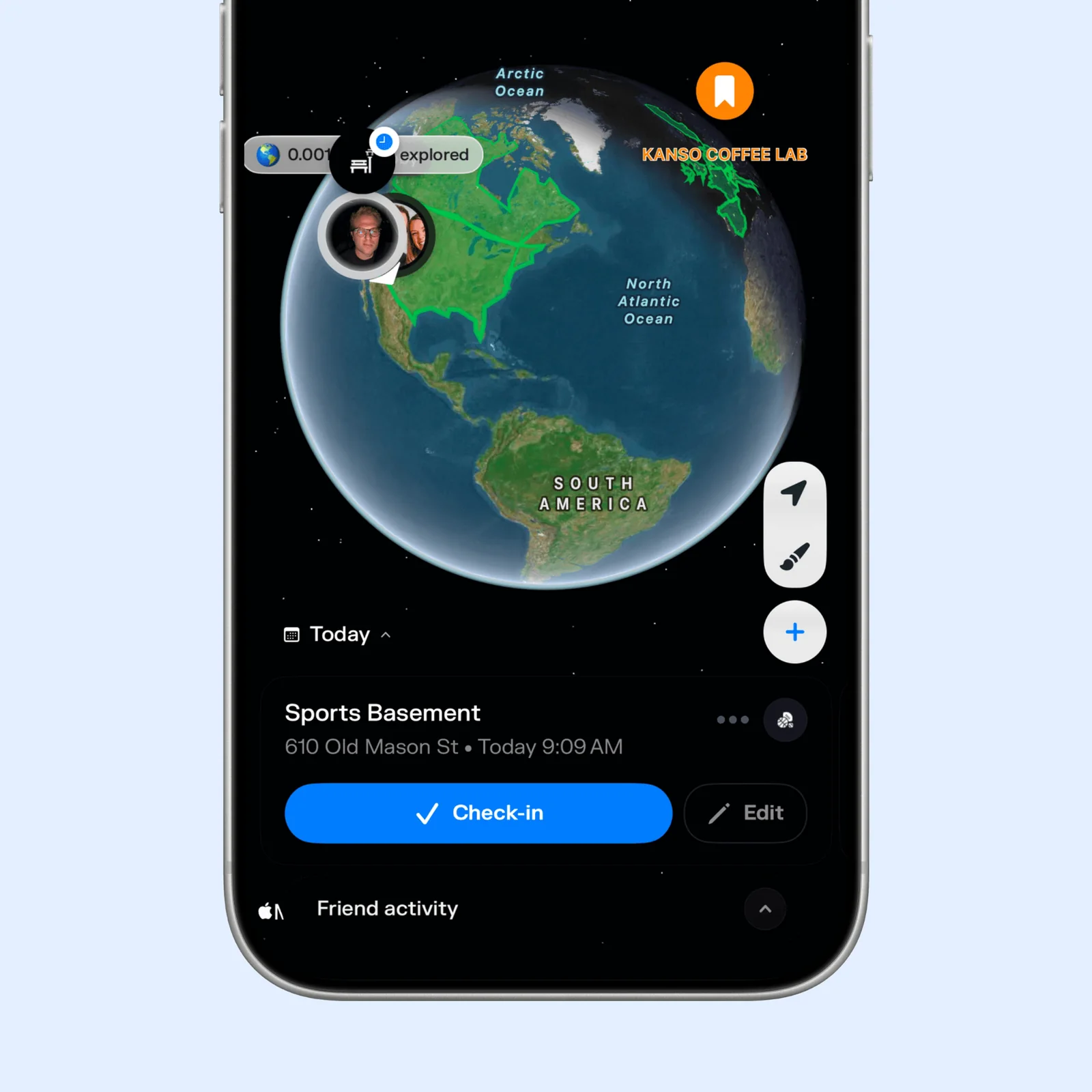
The map records places, cities, and countries. Fog of World mode makes unexplored areas distinct, which adds a light game layer to everyday walks and travel.
Stats, badges, rankings, and mayorships are there if you enjoy them. You can also use the app more quietly as a record of the places that became part of your routine.
Ask why a recommendation fits
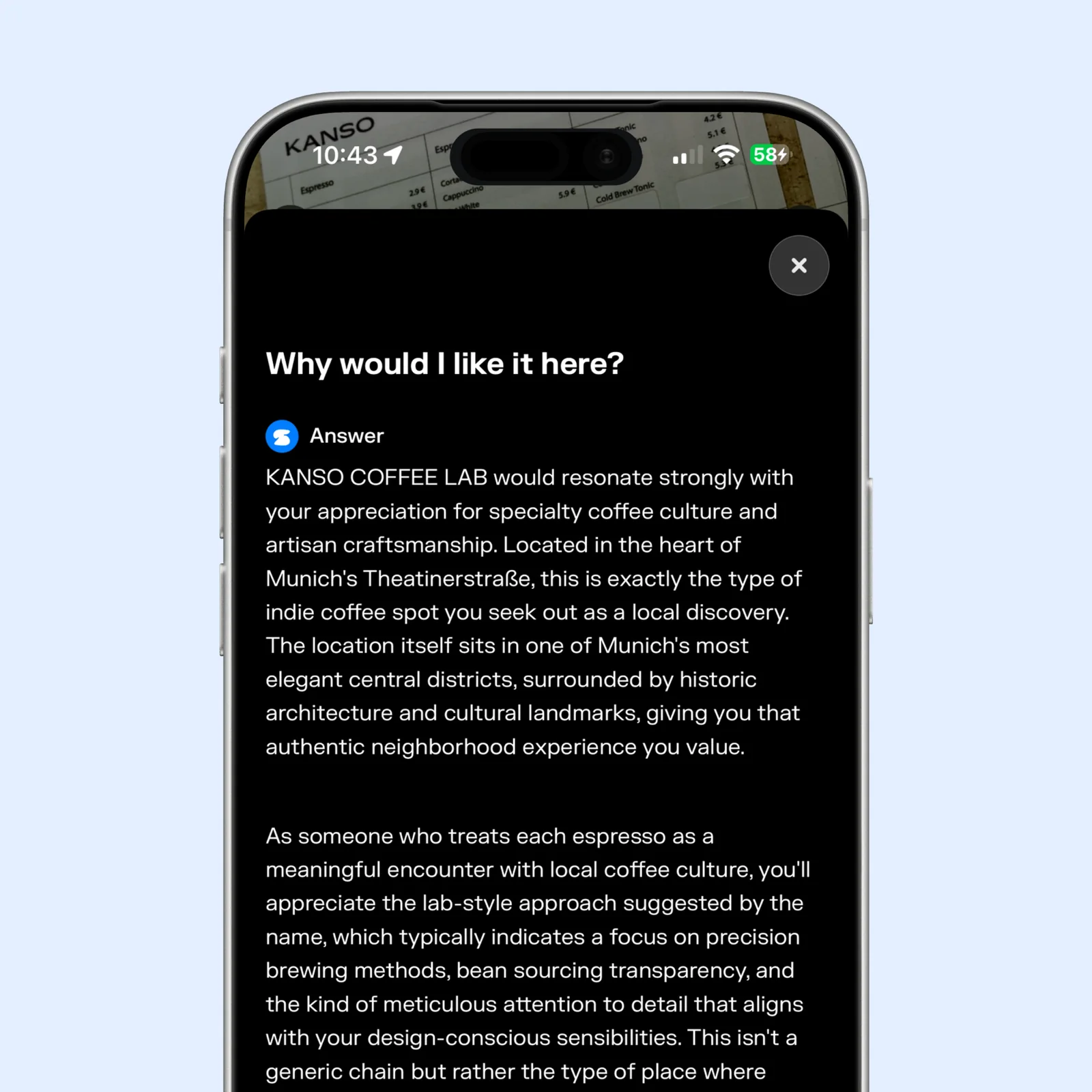
The explanation view connects a suggestion to your preferences. That is more useful than a generic “popular near you” label because it tells you what the app thinks it learned.
Treat the explanation as a clue, not a fact. If it repeatedly misunderstands your taste, more deliberate check-ins can help. Save places you would return to and skip checking in only for points.
What to know before you try Superlocal
Superlocal is free to download, with optional subscriptions. The current listing supports iPhone and requires iOS 17.5 or later. Location is central to the product, so review its location and privacy permissions before enabling automatic features.
Automatic place logging can misunderstand a stop, especially in a dense area with several businesses. Correct mistaken check-ins and avoid using the map as an exact record of where someone was at a specific time. The data is better suited to personal discovery than proof.
Community scores and mayorships can also change why you visit. If the goal is a useful personal map, check in because the place belongs in that map, not because another badge is available. This keeps later recommendations connected to real preferences.
Start with five places you already know well. That gives the recommendation system a more useful base than random check-ins during one afternoon.
Then ask for one nearby recommendation and compare its explanation with what you actually value. A poor match is useful feedback before you depend on the app in an unfamiliar city.